

What Is a Slitter Machine? Your Complete Guide to Types, Structures and Applications
If you're in the packaging, printing, or converting industry, you've likely heard the term slitter machine - but do you know exactly how these workhorses of material processing can benefit your production line? Whether you call it a slitter machine or some others call it a slitting machine (both terms refer to the same essential equipment), this guide will walk you through everything you need to know.
What Exactly Is a Slitter Machine?
Simply put, a slitter machine is designed to cut large rolls of material - think paper, plastic film, aluminum foil, copper foil, or fabric - into narrower, more manageable strips. Most modern slitter machines come with integrated rewinding capabilities, creating an efficient system known as a slitter rewinder. See the following sketch drawing:

Think of it this way: if you receive a massive 1-meter-wide roll of film but need 10cm wide rolls for your production line, a slitter machine is what makes that transformation possible. It handles the entire process - unwinding, cutting, and rewinding - in one smooth, high-speed operation.
The beauty of today's slitter equipment lies in its precision. You're not just cutting material; you're creating finished rolls that are ready for your downstream processes, whether that's printing, packaging, or further converting.
Types of Slitter Machines: Finding the Right Fit for Your Needs
Not all slitter machines are created equal. Based on how they rewind materials, you'll encounter several main types. Understanding these differences helps you choose the right equipment for your specific applications.
1.Center Rewind Type
In a center rewind slitter, the rewinding shaft connects directly to a motor that provides the rewinding power (or with drive power connect to the shaft). As your rewinding roll diameter grows during production, the control system automatically maintains consistent tension to keep the web materials smooth and flat.

This type works best for: Thin, delicate materials like plastic films where tension control is critical to preventing stretching or deformation. This type of slitter machine is most common type in the market, and widely used in converting paper, film or flexible packaging laminates etc.
2.Surface Rewind Type
A surface rewind slitter takes a different approach. Motor-driven steel rollers use friction to drive the core rotation. This mechanical contact creates tight, dense rolls with beautifully flat edges.

This type excels with: Thicker, sturdier materials such as paper, paperboard, and non-woven fabrics where you need firm winding. Especially it is good for the rewind materials with tight tension. Such as cash register paper roll, record paper roll, with small inner core diameter. Or it is for big width and diameter rewinding and single shaft rewinding.
3.Center and Surface Rewind Combination Type
A center rewind and surface rewind type combination slitter machine. This is also widely used for slitting and rewinding highly required materials. The rewinding shaft rests against the big driving cylinder, the rewinding shaft itself also with drive power (servo motor drive, or gear and chain drive), so you can rewind the material with smooth edge side and big diameter.

4.Shaftless Rewinding Type
Instead of using a thorough air shaft, a shaftless slitter machine grips your material from both ends using clamping heads. This design proves invaluable when you're working with extremely wide materials.
Where you'll see this: Large-scale production lines handling wide webs of film or paper.

5.Traverse Rewinding Type
For those specialty applications involving very narrow materials, a traverse winding slitter machine delivers. It layers material evenly through lateral oscillation, creating neatly wound spools.
Perfect for: Products under 4mm wide, including tear tapes, ultra-narrow labels, and specialized industrial tapes.

Other Ways to Classify Slitter Machines
Beyond rewinding methods, you can also categorize slitter machines by:
- Number of rewinding shafts: Single-shaft, dual-shaft, or multi-shaft turret configurations
- Machine structure: Horizontal, vertical, or gantry-style framesand others.
- Automation level: From manual setups to fully automated systems with servocontrols, have quite some automation levels.
The variety means there's likely a slitter machine perfectly matched to your specific production requirements.
How Does a Slitter Machine Work?
The Simple Answer
A slitter machine unwinds your large master roll, maintains precise tension throughout the process, cuts it into narrower strips using precision blades, and rewinds those strips onto cores - all ready for your next production step.
A Closer Look at the Process
Let's walk through what happens when you run material through a slitter machine:
Step 1: Unwinding - Your master roll mounts on the unwind stand. Here, tension control systems work constantly to prevent wrinkles or stretches. Web guiding systems use sensors to keep everything perfectly aligned before entering the slitting unit.

Step 2: Slitting – This is where the magic happens. Your material passes through precision cutting tools—rotary shear blades (working like scissors), razor blades, or crush-cut knives. The method you choose depends on your material type and what you're trying to achieve.

Step 3: Rewinding – Finally, those freshly cut strips wind onto individual cores, forming neat, consistent rolls ready for use or shipping.
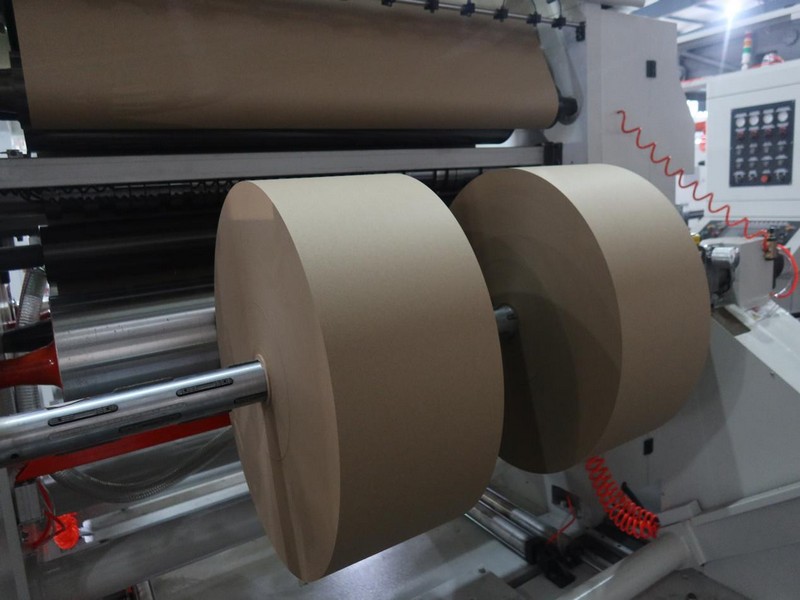
The entire operation runs continuously at high speeds, with modern slitter machines maintaining remarkable consistency throughout long production runs.
Key Components of a Slitter Machine
Understanding what makes up a slitter machine helps you appreciate how these systems deliver such precise results. Every slitter machine consists of three main sections:
|
Section |
What It Does |
Key Components |
|
Unwind Section |
Prepares your material for processing |
Unwind stand, tension controller, web guide |
|
Slitting Section |
Cuts material to your specified widths |
Knives, blade holders, slitting mechanism, adjustment systems |
|
Rewind Section |
Collects finished rolls |
Rewind shafts, tension controller, turret system. |
The Unwind Section: Where It All Begins
Your slitter machine's unwind section lays the foundation for everything that follows.
Unwind Stand – This sturdy frame supports your master roll during operation. Many modern slitter machines feature shaftless designs that simplify loading and reduce operator effort.
Tension Control – Think of this as your material's cruise control. Advanced systems constantly monitor and adjust tension based on your material's characteristics, preventing the wrinkles or stretching that ruin finished rolls. Traditional tension control through a magnetic brake and tension controller to realize the tension, nowadays the slitter machine with independent motor through servo control or frequency inverter to realize the automatic tension control, it will automatically calculate the diameter and speed, to maintain the force to keep consistent tension.
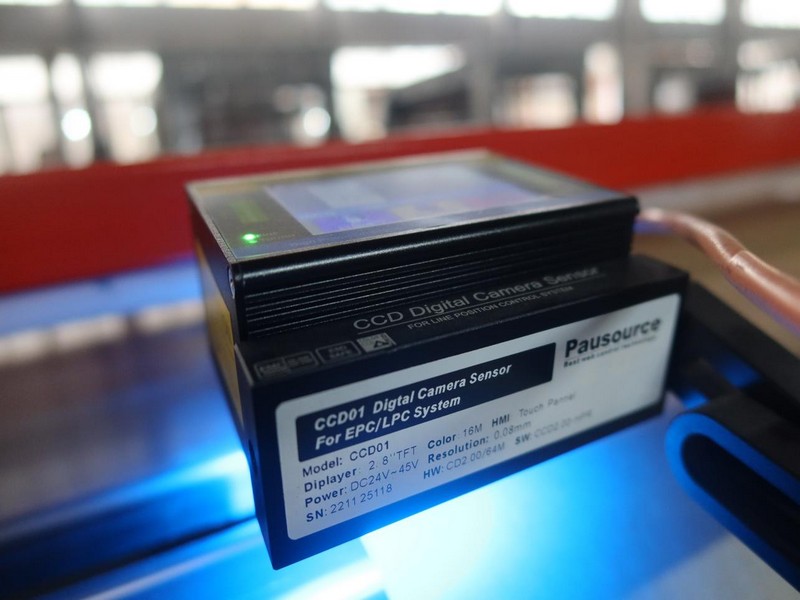
Web Guiding System – Optical, hydro-pneumatic or ultrasonic sensors track your material's edge and make micro-adjustments to keep everything perfectly aligned as it enters the slitting section. The web guide could track the edge side or track the printed line (for slitting of printed materials such as flexible packaging film). To make sure the unwinding materials are in correct position, choosing the suitable web guide is also quite important.
The Slitting Unit: The Heart of Your Slitter Machine
This is where your slitter machine earns its keep. The design and configuration here directly determine your cut quality and production flexibility.
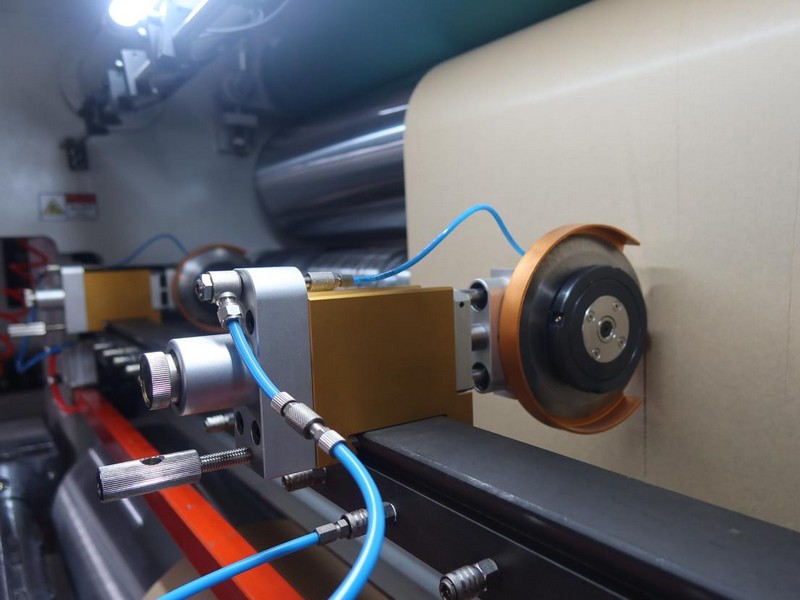
Knives and Blades - Your choice of cutting tools depends entirely on what you're running. Circular blades, straight blades, and air knives each have their place. For specialized applications like certain webbing, you might even need heated circular blades.

Straight knife installed

Both circle knife and straight knife installed
Air knife system
Blade Holders – These precision components secure your knives and allow fine adjustments that optimize cut quality while minimizing blade wear.
Slitting Mechanism – The overall system determines how blades interact with your material. Rotary shear mechanisms work like precision scissors, while razor systems use sharp blades passing through the material.
Adjustment Systems – Modern slitter machines increasingly feature automatic knife positioning. You simply enter your settings on a touchscreen, and the knives move to their exact position, reducing setup time and eliminating manual measuring errors.
The Rewind Section: Where Quality Finishes
The rewind section determines what your finished rolls look like and how well they perform downstream.
Rewind Shafts – These support your cores during rewinding. With proper tension adjustment, they ensure uniform winding that prevents telescoping or uneven layers. Speaking about the rewinding shafts, the common types of shaft transit from old mechanic shaft to air shaft then differential air shaft. With the development of modern technology, there are new technology materials to make the shaft stronger, durable and light in weight, such as shaft made of carton fiber. Nowadays the differential air shaft is most popular on the common slitting machine, it can improve the rewinding rolls quality when for some material not even in thickness, because it is combined by many small width rings, usually width 25mm,50mm, or others special size. The design of rings varies, so they can fit for a wide range of different materials requirement.


Rewind Tension Control - Maintaining consistent tension throughout winding ensures every roll has the same tightness - critical for downstream processes that expect uniform rolls.
Turret Systems - If you're running high-volume production, a turret-equipped slitter machine lets you change rolls without stopping. When one roll completes, the turret rotates, bringing empty cores into position while you unload finished rolls. But this system is mainly for rewinding diameter not big.
Lay-on Rollers - These apply controlled pressure during rewinding, ensuring smooth, wrinkle-free surfaces, especially important for thin or delicate materials.
Why Your Operation Needs the Right Slitter Machine
Whether you're in flexible packaging, label printing, textiles, or electronics, the right slitter machine transforms how you handle materials. You're not just cutting rolls - you're creating precisely sized materials that feed efficiently into your downstream processes.
Modern slitter machines pack impressive technology:
- Precision Tension Control keeps your films and papers stress-free during processing
- Differential Shaft Technology eliminates tension inconsistencies across multiple rolls.
- Automatic Knife Positioning slashes setup time between jobs
Industry slitter machine leaders like KINGSUN continue refining these technologies, helping operations like yours achieve consistent quality and maximum uptime.
Ready to Find Your Ideal Slitter Machine?
Every converting operation has unique requirements. The perfect slitter machine for your neighbor might not suit your material mix, volume demands, or floor space.
That's why working with experienced slitter machine manufacturers matters. They'll help you navigate the options - center wind vs. surface wind, shaftless vs. traditional, manual vs. automatic positioning - to find the configuration that delivers exactly what you need.
Looking forward to upgrading your slitting operation? Contact a trusted slitter machine supplier to discuss your specific requirements. With the right equipment partner, you'll boost efficiency, reduce waste, and produce consistently better rolls.
Learn More About
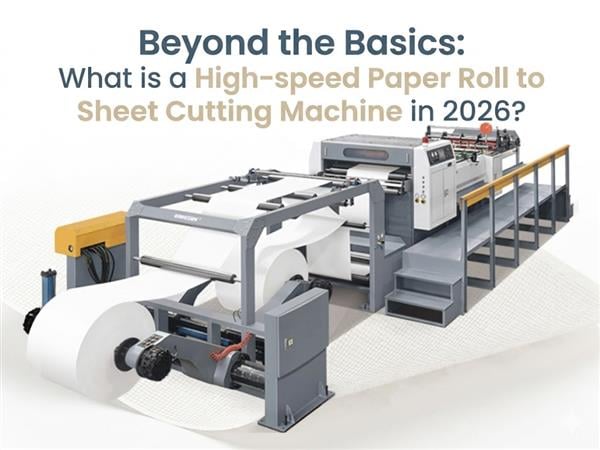
Beyond the Basics: What is a High-speed Sheeter Paper Machine in 2026?
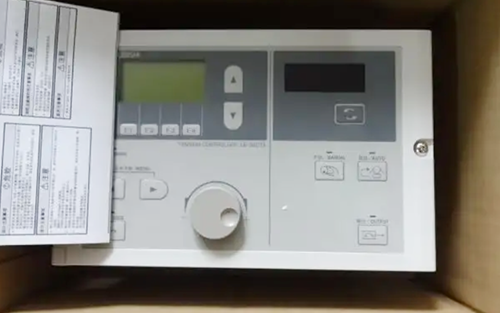
The Importance of Tension Controlling of Slitter Rewinder
Slitter rewinder tension controlling is very important on the process of slitting, it depends on whether if we can get qulity finished products, so we have to pay more attention of this tension controlling system during slitting.
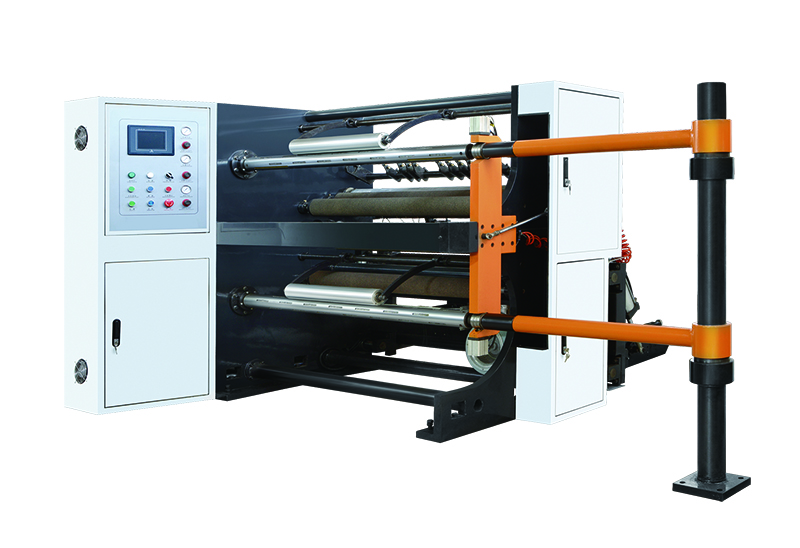
How to choose slitting rewinding machines (1)
How to choose slitting rewinding machines (1) First, the choice of slitting machine models depending on the variety of packaging materials, specifications, production scale, degree of automation, and product quality, and other factors, there are different models slitting rewinding machines.