

Label Flexographic Printing Presses Technical Features and Application
What is a Label Flexographic Printing Press?
A label flexographic printing press is a specialized branch of flexographic printing technology, specifically designed for producing various label products, such as self-adhesive labels, product identifiers, and anti-counterfeit labels. Its core technology lies in using flexible printing plates (typically photopolymer or rubber plates) and low-viscosity inks with good flow properties. Ink is uniformly transferred to the printing plate via a precisely metered anilox roller system and ultimately transfer onto the printing substrate such as paper or film etc.
Compared to other printing methods, label flexographic presses are renowned for their high efficiency, flexibility, environmental friendliness, and powerful inline converting capabilities, perfectly meeting the modern label market's demand for multi-variety, small-batch, and short-cycle production. Since label products are generally smaller in size than flexible packaging products, this equipment is also commonly referred to as a narrow-web flexographic printing machine.
In terms of web width definition, the traditional core range for narrow-web presses is 13 inches to 17 inches (approximately 330 mm to 430 mm). This is the most common and model-rich specification in the global market, especially suitable for most self-adhesive label production. To improve equipment utilization and expand business scope (e.g., producing in-mold labels, shrink sleeves), wider models have emerged on the market, such as 22-inch (approx. 560 mm) or even 26-inch (approx. 660 mm) "wide-format narrow-web" presses. Specific specifications vary slightly among manufacturers but are generally designed around these mainstream printing widths.
Key Technical Features
- High Precision and High Speed: Modern high-end models utilize fully servo-driven motors and digital registration systems. Printing speeds commonly reach 150 to 300 meters per minute, or even higher. Advanced closed-loop control systems ensure registration accuracy remains stable within ±0.1 mm during multi-color, high-speed printing, meeting the requirements for high-definition images and fine text.
- Flexible Structural Design: The mainstream structure is the stack press (or inline press), where individual printing and processing units are arranged horizontally and independently. This design offers unparalleled flexibility, allowing operators to easily change plates, adjust color sequences, and add or remove process units (like cold foil stamping, screen printing), making it ideal for flexible production of multiple varieties and small batches. Another structure, the central impression (CI) cylinder press, arranges all printing units around one large common impression cylinder. This provides more stable substrate tension and extremely high registration accuracy, making it particularly adept for continuous printing of long-run, high-definition film labels.
- Highly Integrated Inline Processing: This is the core competitive advantage of modern label flexo presses. A single machine can not only perform multi-color printing but can also integrate rotary die-cutting, hot/cold foil stamping, lamination (gloss, matte, holographic), varnishing (spot or full), slitting, waste stripping, sheeting, and even digital coding inline. This "one-stop" production mode significantly shortens production cycles, reduces handling and storage of semi-finished products, and improves overall efficiency and quality control. Some high-end models can also achieve hybrid configurations combining flexo and digital printing units, truly enabling "multi-function in one machine."
- Broad Material and Ink Compatibility: The equipment can handle printing on everything from plain paper and coated paper to various film materials (like PET, PP, PE, BOPP, PVC) and specialty materials (like synthetic paper, foil paper). Regarding inks, they fully support environmentally friendly water-based inks and ultraviolet (UV) curable inks, meeting the strict hygiene and safety standards of industries like food and pharmaceuticals while achieving excellent print results and durability.
Common Types of Flexographic Printing Presses
- Inline Label Flexo Press: The absolute mainstream of the market. Its modular design is like "building blocks," allowing you to configure the number of print stations and converting units according to your needs. Job changeover times are short, and process adjustments are flexible, enabling efficient handling of both short-run and medium-to-long-run orders. It represents the current direction of flexible production in label printing.
- Central Impression (CI) Cylinder Label Flexo Press: Known for its exceptional registration accuracy and stable handling of film materials. Thanks to the stable support of the central impression cylinder, the material undergoes minimal distortion during printing, making it particularly suitable for printing long-run, high-quality color film labels (like beverage bottle labels, shrink sleeves). However, changeover times for products with different print repeats are typically longer than with inline presses.
- Stacked/Tower Label Flexo Press: This is a more traditional design where the print units are stacked vertically on the main frame. Its advantages are a smaller footprint and relatively lower equipment cost. However, as the number of colors increases, the operating height rises significantly (e.g., a six-color press may exceed 3 meters), posing challenges for daily operation and maintenance. To improve user friendly operation, modified designs have appeared on the market, such as splitting the print units into two sections (e.g., 2 3, 3 3 configurations), maintaining a compact layout while reducing overall machine height for easier operation.
Application Fields
Label flexographic printing technology covers almost all product areas requiring labeling:
- Food & Beverage: Bottled water labels, beverage shrink sleeves, can labels.
- Pharmaceuticals & Health Products: Drug information leaflets, supplement bottle labels, requiring high clarity and regulatory compliance.
- Consumer Goods: Shampoo, shower gel, cosmetic bottle labels, emphasizing perfect appearance and weather resistance.
- Logistics & Retail: E-commerce shipping labels, retail price tags, warehouse management labels.
- Industrial & Electronics: Wire and cable markers, industrial product nameplates, electronics instruction labels.
- Anti-Counterfeiting & Special Applications: Alcohol anti-counterfeit labels, electronic supervision code labels, in-mold labels, etc.
Mainstream Brands and Selection Advice
Leading global label flexo printing equipment manufacturers include Mark Andy, BOBST, Gallus (part of the Bobst Group), OMET, WINDMOELLER & HOELSCHER, among others. Chinese domestic brands like Weigang Technology, Kingsun Machinery etc are also rising rapidly, offering cost-effective choices. These brands have their respective strengths in equipment precision, operational stability, automation level (e.g., auto-registration, auto-wash), and process innovation capability.
Summary and Selection Advice
For the vast majority of self-adhesive label printing and converting companies, choosing a inline flexographic label printing press with a web width of 13 inches (330mm) or 17 inches (430mm) is a wise choice that strikes the optimal balance between market demand, investment cost, production flexibility, and overall efficiency. This specification is sufficient to handle over 80% of label products on the market.
When making your final decision, we recommend a deep analysis of:
- Your Product Mix: The size range of your mainstream labels, commonly used material types, color, and process complexity.
- Your Business Model: Is your focus on short-run quick printing, or do you handle medium-to-long-run orders? How frequent are job changeovers?
- Your Future Plans: Are you planning to expand into new areas like film labels or anti-counterfeit labels?
Engaging in detailed technical discussions with label printing and converting equipment suppliers and arranging sample tests whenever possible are crucial steps to ensure successful equipment selection and maximize your return on investment. Most capable manufacturers can offer a certain degree of customized configuration to meet your specific production needs. What you need to do is to choose the most suitable ones of narrow web flexographic label printing machine, which fit for your own investment budget and label production requirements.
Learn More About
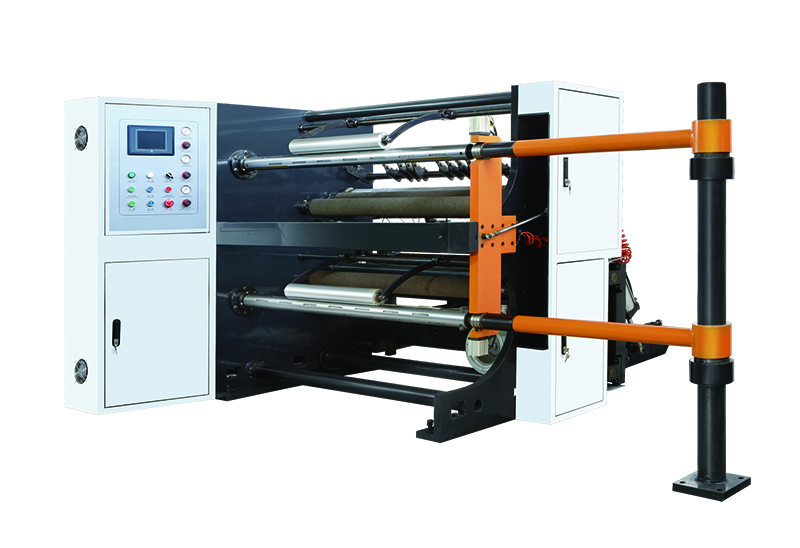
How to choose slitting rewinding machines (2)
How to choose slitting rewinding machines 2. Every business has its own primary product specifications. Many large enterprises owns large slitting rewinding equipment so with big quantities production, the main specifications of products easy to classify; some small businesses due to less equipm...
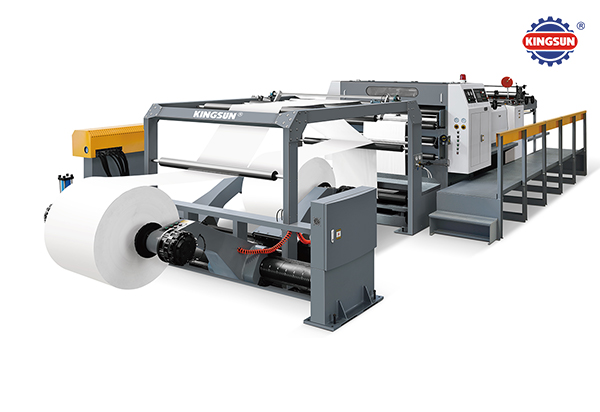
What is High Speed Paper Roll to Sheet Cutting Machine?
The high-speed paper roll to sheet cutting machine is kind of equipment specially designed for jumbo roll paper slitting and cutting into sheet paper. The thickness of the converting paper is between 50-650gsm. After processing, the cut paper can go directly to print on an offset press or to cut again on guillotine according to the actual situation. It is the most efficient equipment for web paper converting. It can also be called a high-speed paper roll sheet cutter. Currently, it is widely used for the paper industry, the printing industry, the paper trade industry. It is different from the slitter rewinder (just slitting) and the paper cutter(guillotine).
Types of Printing Process Materials
Paper, Carton Board, Corrugated & Plastics: A Complete Guide to Kinds of Packaging Materials